
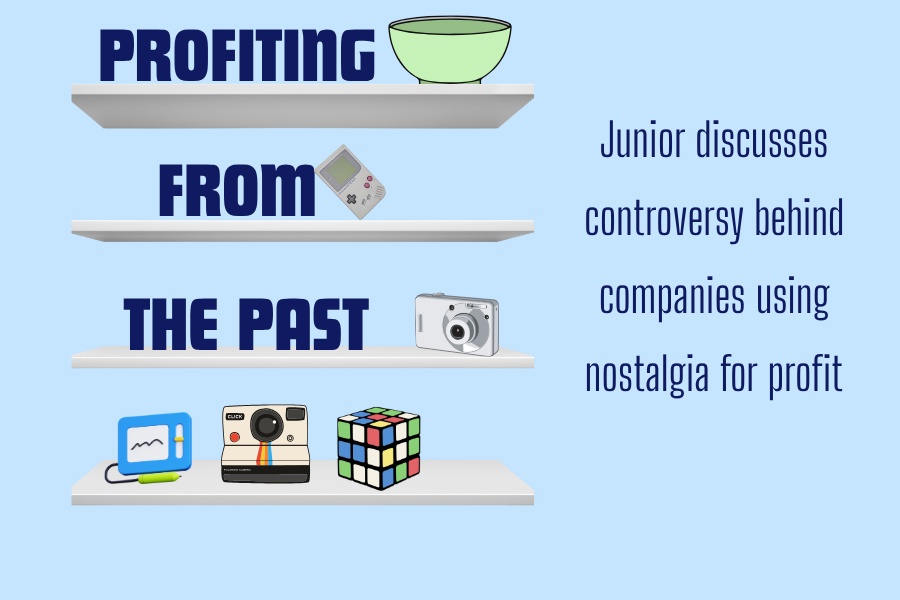
A saying as old as time told from one generation to the next, “one man’s trash is another man’s treasure” represents the weight that reminiscing on the past holds. In quiet times, people often look back on the days that felt easier, lighter and more real. The familiar pull of nostalgia begins to tug on one’s heartstrings.
As people grow older, nostalgia generally tends to grow throughout their lives. A specific smell, a particular place or sight holds the power to send someone back to a memory filled with ribbons of emotion. Each generation holds its own form of nostalgia with different experiences empowering a person.
“I remember having a lot of time to explore, read and just be a kid with almost no interference from my parents,” social studies department chair Michelle Crane said. “I think younger generations have been more closely monitored by their parents, especially through having planned activities that take up a great deal of a kid’s free time.”
Despite nostalgia’s positive image, companies found a way to use these feelings against consumers. People can use nostalgia as a coping mechanism when they feel down from the more positive times in their life. Because of this, companies strive to remake products that were once popular to market to people who feel nostalgic feelings toward them.
“I recently purchased a set of vintage Pyrex mixing bowls in the exact same pattern my grandmother used when I was little,” English teacher Anita Badgett said. “[ I bought them] not because I needed mixing bowls, but because I love the memories they induce when I see them sitting on my counter.”
Another way companies use this tactic is by focusing on the more popular characters of a franchise and basing their entire line of merchandise on them. Many consistently use this, which can ruin the image of the character and tire people out, taking away the meaning behind the memories.
“Trying to tap into one consumer group’s memories may be good for business with that group, but it can create further divisions between groups who may see those moments in history or those trends as being problematic in some ways,” Crane said. “Especially since people were not always as aware of how certain depictions of people could cause isolation, reinforce stereotypes or contribute to further marginalizing people.”

